
Views: 3 Author: Site Editor Publish Time: 2025-11-10 Origin: Site
In the fast-paced world of shower room accessory manufacturing, frequent machine stops can result from inconsistent niche dimensions and fluctuating material tension. To minimize these issues, engineering teams are rethinking how shower room shower niches are designed and fabricated. A focus on precision structure, balanced material stress, and standardized installation geometry promises a longer maintenance interval and stable output quality. Let’s explore how these optimizations can reshape workshop efficiency.
Shower room shower niches are recessed compartments installed within shower walls, often crafted from stainless steel or composite materials. They serve both functional and aesthetic purposes, providing a waterproof storage cavity within a tiled surface. In manufacturing, their production involves precise welding, polishing, and sealing to maintain durability and waterproof reliability under humid conditions.
For workshop engineers, the challenge lies in maintaining structural uniformity. Variations in niche wall thickness or tension during welding can trigger micro-deformations, influencing assembly alignment and long-term sealing performance. Over time, this inconsistency increases the frequency of equipment recalibration and maintenance stops.
Technicians commonly perform load-bearing and water-pressure tests to validate structural stability. A shower niche with optimized tension distribution minimizes warping, ensuring better alignment with wall tiles and reducing the need for manual correction during assembly.
Installers typically verify slope and alignment before final sealing, ensuring consistent waterproof performance. Many evaluators perform salt-spray testing on stainless steel shower niches to assess corrosion resistance in humid environments—a crucial factor in maintaining product integrity.
Learn more about shower niches manufacturing and design principles.
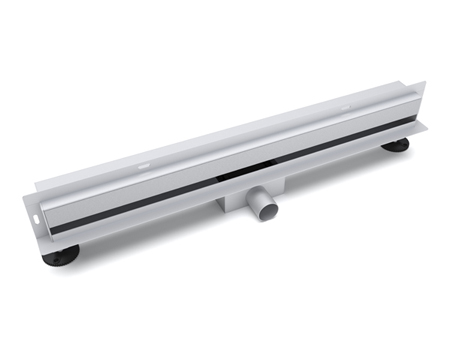
In residential and hotel applications, precise shower niches ensure alignment with wall tiles and prevent water seepage. Stainless steel structures such as SUS304 niches deliver both strength and corrosion resistance, critical for long-term maintenance reduction. Properly tensioned materials prevent distortion and seal failure during repeated thermal cycles.
Facilities like spas demand high humidity resistance and seamless design. Horizontal shower niches with reinforced edges maintain tension balance and prevent structural fatigue caused by prolonged exposure to moisture and cleaning agents. Engineers often verify the internal stress profile to avoid cracking during polishing.
Installers often fine-tune the slope of wall-mounted shower niches during bathroom renovation to ensure smooth drainage and eliminate pooling. Consistency in production directly translates to fewer maintenance requests from downstream assembly teams.
Explore additional shower room accessories that complement modern waterproof design systems.
Optimizing shower niche fabrication minimizes production interruptions and stabilizes tension during forming and welding. The following benefits illustrate how engineering refinement contributes to facility-level efficiency:
Reduced Maintenance Frequency: Balanced tension and dimensional consistency reduce stress on welding machines and polishing heads, extending service intervals.
Improved Material Stability: SUS304 stainless steel with controlled microstructure resists deformation during heat treatment, ensuring uniform fitment across production batches.
Enhanced Waterproof Performance: Properly sealed corners reduce leakage, minimizing quality returns and warranty repairs.
Standardized Production: Automated forming and CNC trimming guarantee tolerance within ±0.2 mm, minimizing human adjustment and alignment time.
Maintenance teams often inspect silicone seals and bracket joints after continuous use to confirm waterproof stability. Regular calibration of forming rollers ensures alignment precision and reduces vibration-induced failures in automated lines.
Understand the innovative processes behind shower drain and niche production.
Traditional shower niches made of plastic or plaster composites often suffer from deformation, leading to uneven tile joints and frequent maintenance. By contrast, stainless steel niches offer superior dimensional stability under varying humidity and temperature conditions. The difference lies in tensile properties and corrosion resistance.
For example, a SUS304 niche can maintain shape under a tensile load exceeding 200 MPa, whereas plastic alternatives may warp under lower thresholds. This consistency reduces equipment recalibration time and minimizes assembly rework across production lines.
Technicians usually verify the tightness of weld seams through ultrasonic or pressure testing to maintain structural integrity. In coastal installations, SUS316 steel may be preferred for its enhanced anti-corrosion performance.
Discover how linear drains complement shower niche systems for efficient water management.
Manufacturing optimization begins with precise material selection and continues through controlled forming, welding, and finishing. In advanced facilities, CNC machining is used to maintain parallelism and surface quality across multiple production lines. Each batch undergoes dimensional inspection, waterproof testing, and salt-spray evaluation.
Cycle testing under varying temperatures helps determine deformation resistance and anti-crack performance. Accessory joints often undergo waterproof pressure and endurance checks before approval, ensuring stability under repeated heating and cooling cycles.

Quality inspectors rely on CE and ISO9001 standards to verify compliance. The introduction of automated polishing robots has further reduced downtime caused by manual inconsistencies, leading to smoother surfaces and uniform edges.
Designing niches for long-term structural integrity reduces replacement waste and contributes to a circular production model focused on material longevity.
By optimizing welding and polishing cycles, facilities minimize energy consumption per unit product, enhancing overall manufacturing efficiency.
Recycling stainless steel scrap and minimizing defective outputs lower both environmental impact and total operating cost.
Learn how Mondeway’s engineering philosophy emphasizes precision, safety, and lifecycle efficiency across its product line.
Optimized design, material control, and precise manufacturing of shower room niches transform maintenance patterns and efficiency across accessory workshops. As facilities move toward automation, these improvements establish a new benchmark for reliability and sustainability in shower room component production.
Explore real project applications


