
Views: 4 Author: Site Editor Publish Time: 2025-11-10 Origin: Site
In shower room production, maintaining stable quality across batches is a persistent challenge, especially in areas such as automatic fastening and bottom sealing. Stainless steel shower niches provide a technical foundation for consistent dimensional accuracy and reliable sealing integrity. By integrating advanced gauge control and standardized accessory manufacturing, they help reduce the high defect rate observed in door edge linking and size deviations. Let’s explore how this framework supports product stability from design to inspection.
Explore Shower NichesStainless steel shower niches are recessed wall structures designed to provide storage and architectural uniformity within shower rooms. In industrial manufacturing, their precision directly affects the alignment and sealing of adjacent panels. As these components are often made from SUS304 or SUS316 stainless steel, the consistent control of material thickness (typically 1.2–1.5 mm) and welding accuracy plays a vital role in achieving gauge stability and long-term corrosion resistance.
Technicians often perform salt-spray testing on stainless steel shower niches to verify corrosion resistance in humid conditions. In addition, inspectors measure wall depth tolerance to ensure that the assembled unit aligns precisely with tile thickness, preventing water retention and deformation during use.
Many bathroom installers use stainless steel welding combined with CNC-machined corners to enhance waterproof sealing. This reduces micro-gaps that may compromise quality consistency between production batches. These technical controls form the backbone of the Quality Stabilization Framework applied in the automatic fastening and bottom sealing area of shower room assembly.
Learn more about linear shower drain integrationStainless steel shower niches are commonly used in residential bathrooms, hotel shower areas, and wellness centers where durability and cleanliness are priorities. In such environments, a stable gauge structure minimizes sealing failures caused by panel misalignment or uneven fastening torque. The Quality Stabilization Framework ensures consistent wall flatness and reduces deviation in joint tolerance during automatic fastening operations.
In high-humidity spa environments, inspectors evaluate the waterproof performance of bottom sealing lines using pressure tests. Consistency in stainless steel thickness and the uniform distribution of fastening torque contribute to long-term sealing reliability.
See how shower accessories improve renovation performance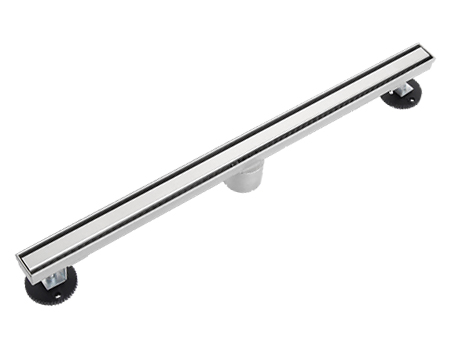
In hotel installations, stainless steel shower niches integrate with linear drains to create a continuous surface that simplifies cleaning and prevents mold growth.
In large-scale manufacturing, automatic fastening systems equipped with torque sensors ensure that each connection meets the same clamping pressure, reducing leak risk at the lower sealing area.
Installers typically check the alignment of niches and drains before final tiling to maintain waterproof continuity. This process aligns with the gauge control principles that stabilize product quality across multiple assembly lines.
Ensures dimensional consistency through controlled manufacturing gauge tolerance.
Reduces defect rates in door edge linking by improving alignment between panels and sealing parts.
Enhances corrosion resistance using SUS304/SUS316 stainless steel with brushed or polished finishes.
Optimizes sealing reliability by standardizing torque application in automatic fastening equipment.
Maintains product performance across multiple production batches by reducing size deviation and assembly errors.
Technicians usually verify panel alignment and sealing performance after torque application to ensure even load distribution. This step is part of the end-of-line inspection, which QA inspectors use to assess consistency between batch samples.
Discover how OEM projects integrate quality frameworksTraditional shower niches and accessories often relied on manual fastening and unregulated sealing compounds, resulting in inconsistent performance and higher defect rates. By contrast, stainless steel shower niches produced under the Quality Stabilization Framework employ controlled gauge calibration, precise fastening automation, and statistical process validation to ensure repeatable quality outcomes.
Compared with older aluminum or plastic structures, stainless steel provides superior load-bearing capacity (≥150 kg) and resistance to thermal expansion, which reduces misalignment at the door edge. The difference in structural rigidity and corrosion resistance allows engineers to maintain uniform sealing pressure even under temperature fluctuations typical in wet-room environments.
Explore innovation in stainless steel accessory technologyThe manufacturing process of stainless steel shower niches involves CNC cutting, TIG welding, and multi-stage polishing to ensure both precision and durability. Gauge calibration systems continuously monitor dimensional variance within ±0.2 mm, enabling accurate alignment during assembly. Each batch undergoes salt spray, load-bearing, and waterproof testing to confirm stability before packaging.
Shower drains and wall accessories are typically assembled in clean environments to minimize contamination during sealing. Inspectors conduct visual and dimensional inspections of bottom seals using non-contact laser tools to verify alignment.
Load-bearing and sealing components undergo life cycle tests exceeding 20,000 cycles to ensure consistent performance under repeated stress. This validation supports defect prevention and helps QA inspectors verify conformity between engineering drawings and actual assemblies.
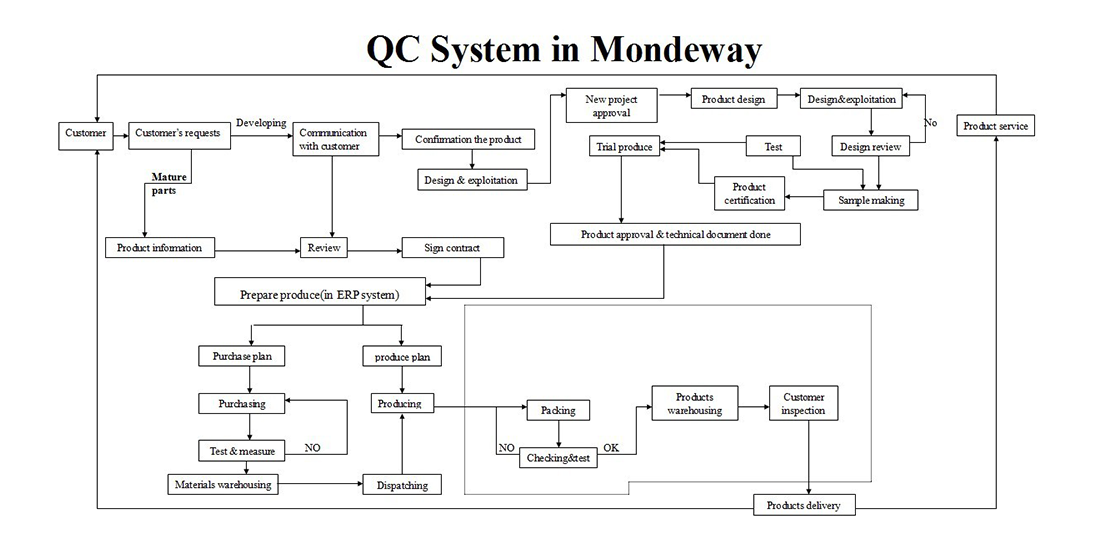
Understand Mondeway® manufacturing philosophyEvery shower niche is manufactured with CNC precision and validated through dimensional consistency checks to maintain a stable installation interface.
Corrosion-resistant stainless steel ensures long-term reliability even in coastal and high-humidity environments such as spas or hotel shower rooms.
QA inspectors perform batch sampling to validate fastening torque, waterproof integrity, and size uniformity before final shipment.
Statistical control systems monitor defect trends and enable proactive adjustments, stabilizing long-term product quality.
By implementing the Quality Stabilization Framework for stainless steel shower niches, manufacturers and QA inspectors can achieve measurable improvements in sealing performance, dimensional accuracy, and long-term corrosion protection. This technical approach fosters reliability across production batches and elevates user confidence in modern shower room accessories.
Explore Related Projects


